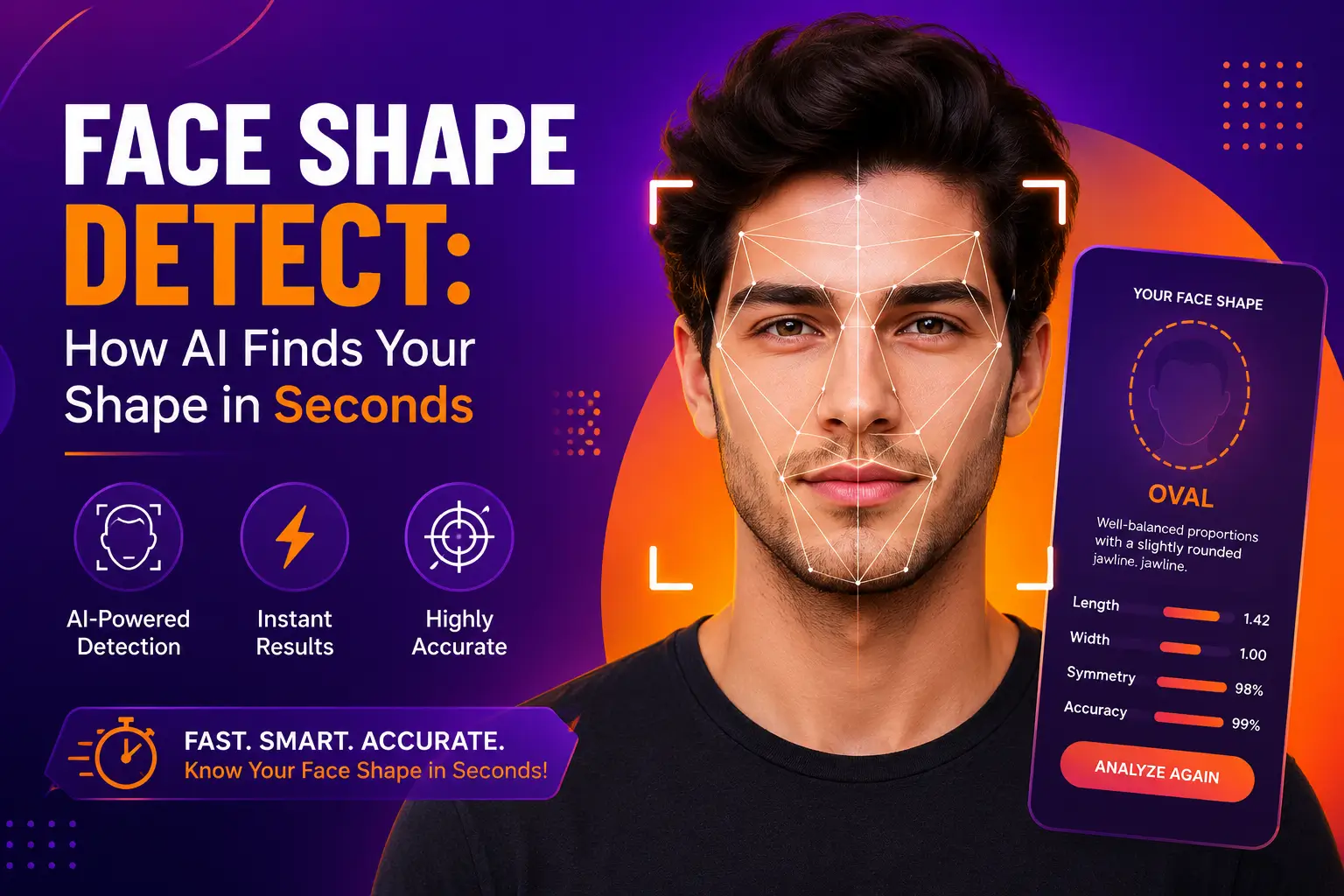
Oval Face Shape

Face Shape AI: How It Works & How Accurate It Is
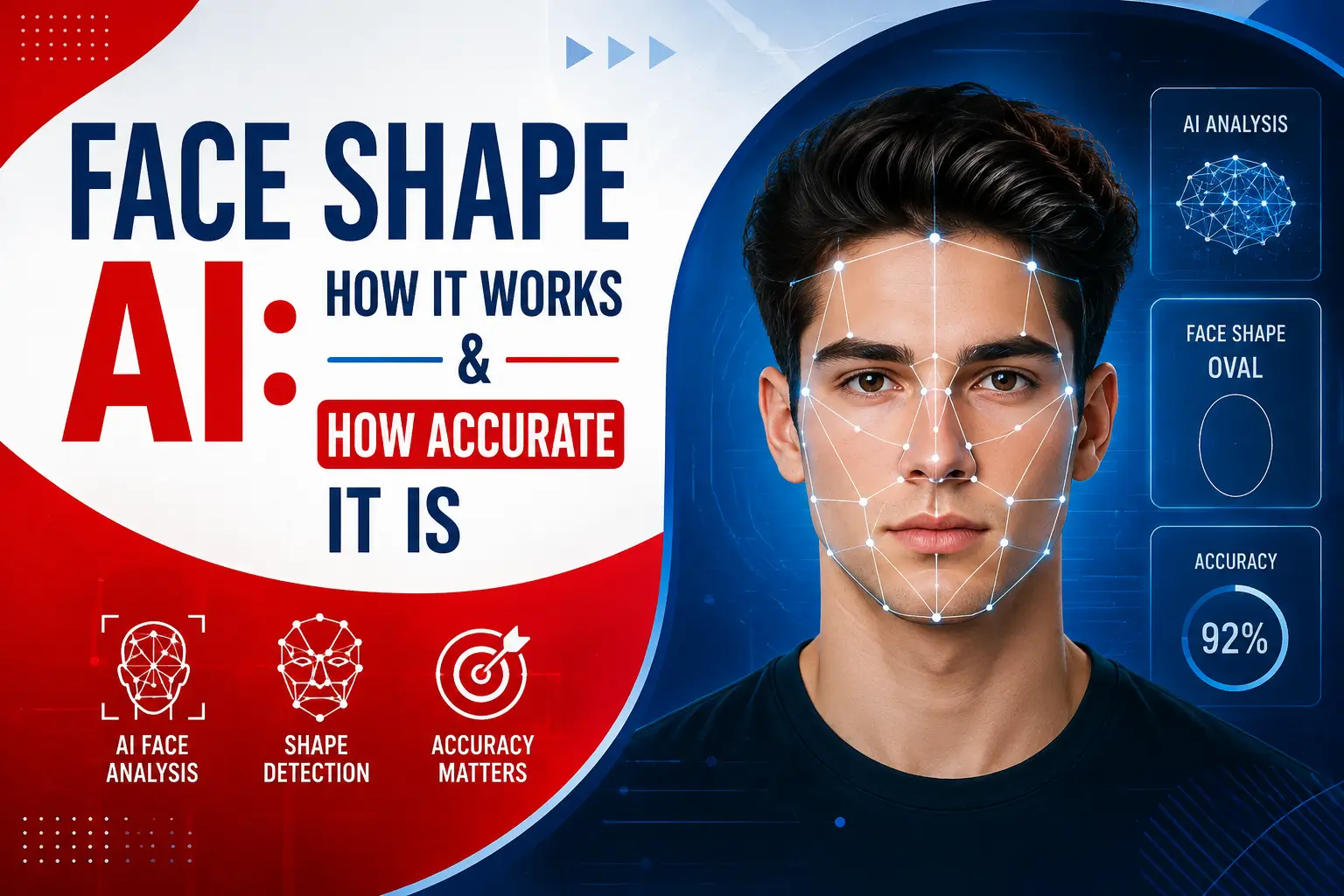
Face Shape AI How It Works & How Accurate It Is

Quick Answer: Face shape AI tools map facial landmarks (68–478 points) and compare forehead, cheekbone, and jaw width against face length to classify your shape. Accuracy depends on landmark count, photo quality, and training data. “Face shape AI” describes any tool that uses computer vision — not a human eye or a quiz — to … Read more
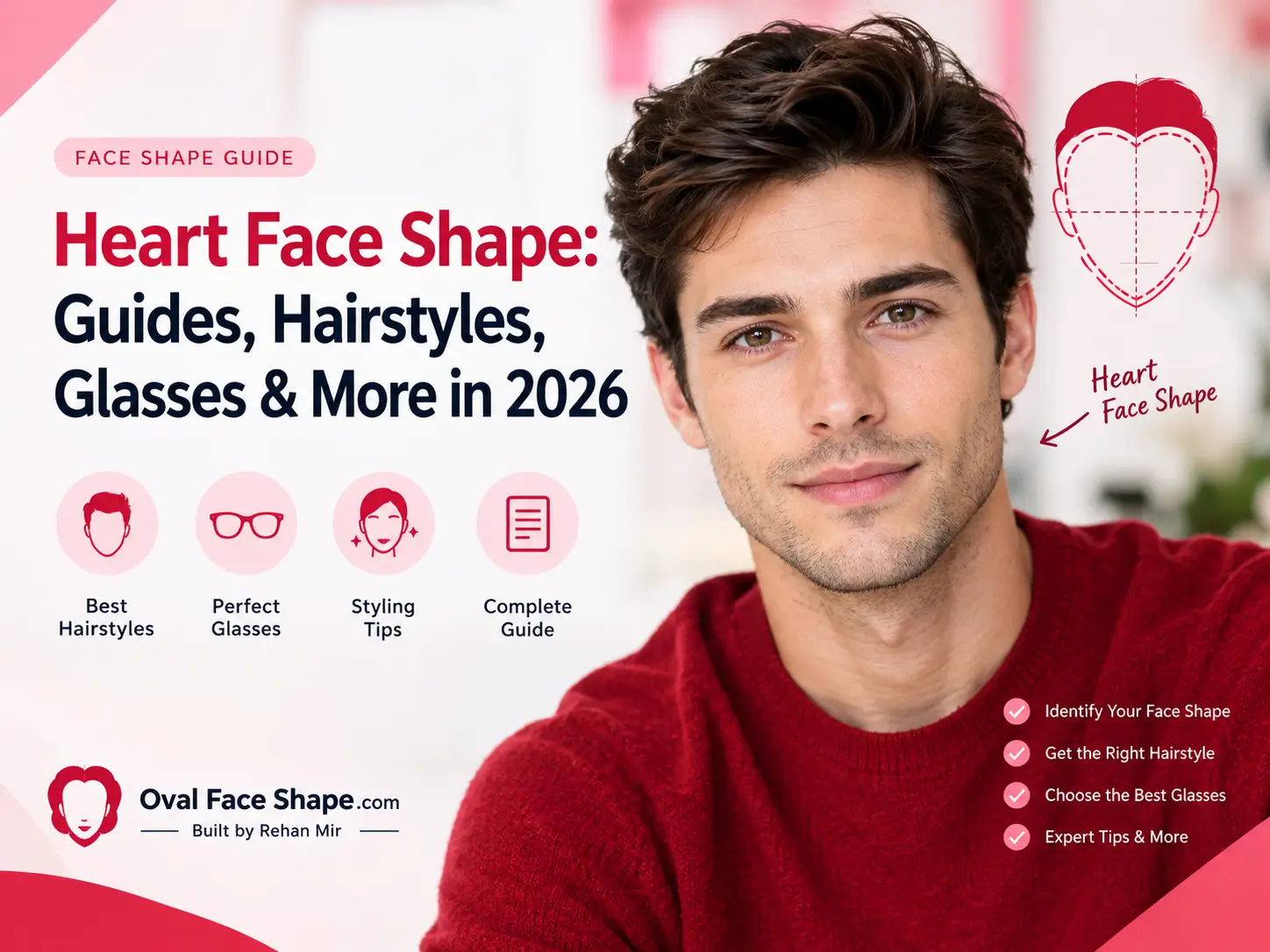
Heart Face Shape: Guides, Hairstyles, Glasses & More in 2026

Heart Face Shape Guides, Hairstyles, Glasses & More in 2026Heart Face Shape Guides, Hairstyles, Glasses & More in 2026

Quick Answer: A heart-shaped face has a wide forehead, prominent cheekbones, and a narrow, pointed chin, sometimes with a widow’s peak. Chin-length hair, lower-face volume, and bottom-heavy glasses can help balance its proportions. A heart face shape is defined by one clear proportion: The forehead is the widest part of the face, and the jawline … Read more

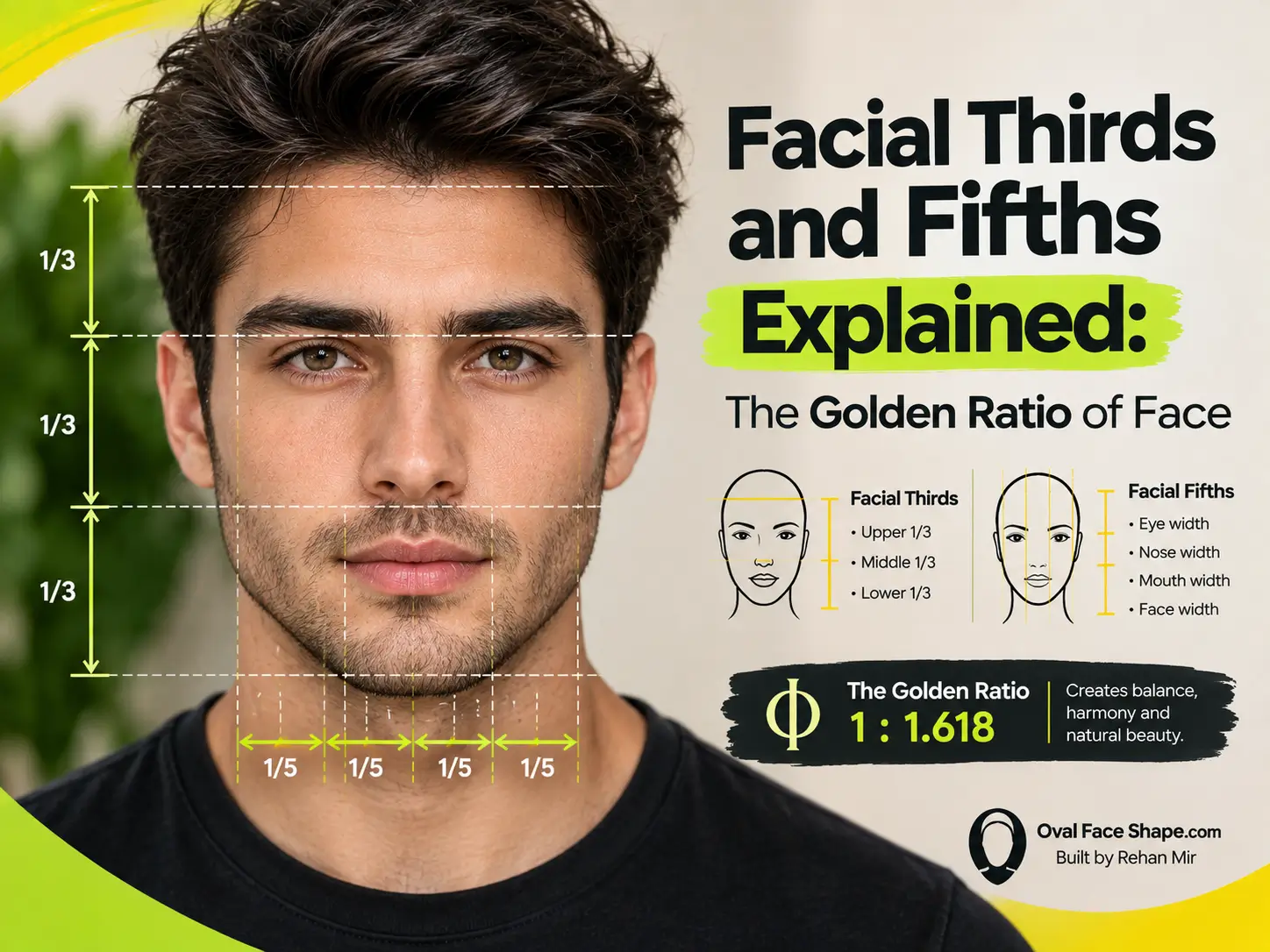
Facial Thirds and Fifths Explained: The Golden Ratio of Face

Facial Thirds and Fifths Explained: The Golden Ratio of Face

Quick Answer: Facial thirds and fifths are guidelines for evaluating facial proportions and balance. Facial thirds divide the face horizontally into three sections, while facial fifths divide it vertically into five approximately equal sections, each about one eye-width wide. Facial proportion talk is everywhere right now — golden ratio calculators, “beauty score” apps, side-by-side celebrity … Read more

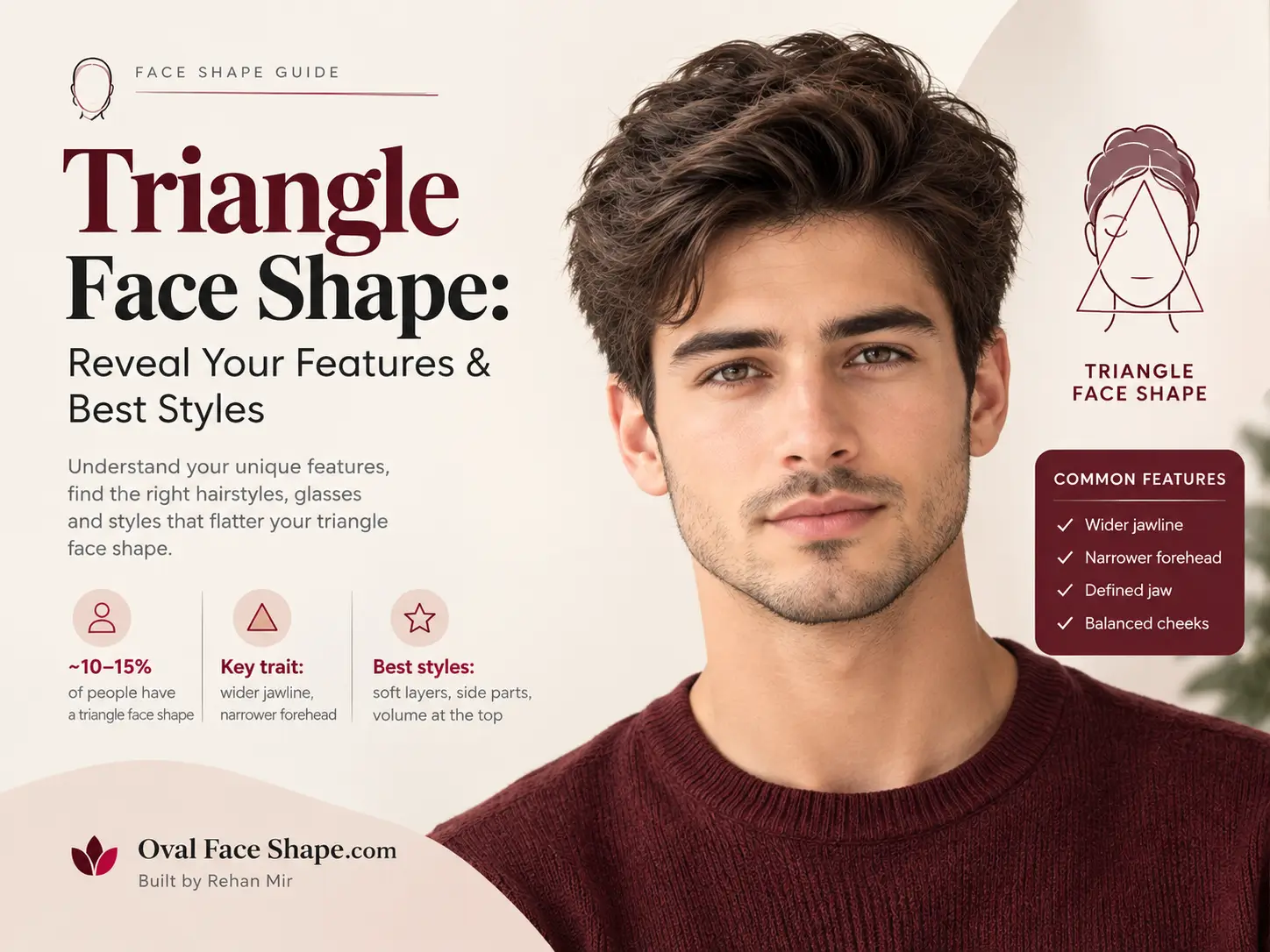
Triangle Face Shape: Reveal Your Features & Best Styles

Triangle Face Shape Reveal Your Features & Best Styles

Quick Answer: A triangle face shape has a jaw wider than the cheekbones, and cheekbones wider than the forehead — the face widens as it goes down. It’s sometimes called a pear face shape. Triangle Face Shape: How to Tell + What Actually Works? If your jawline feels like the widest, most defined part of … Read more

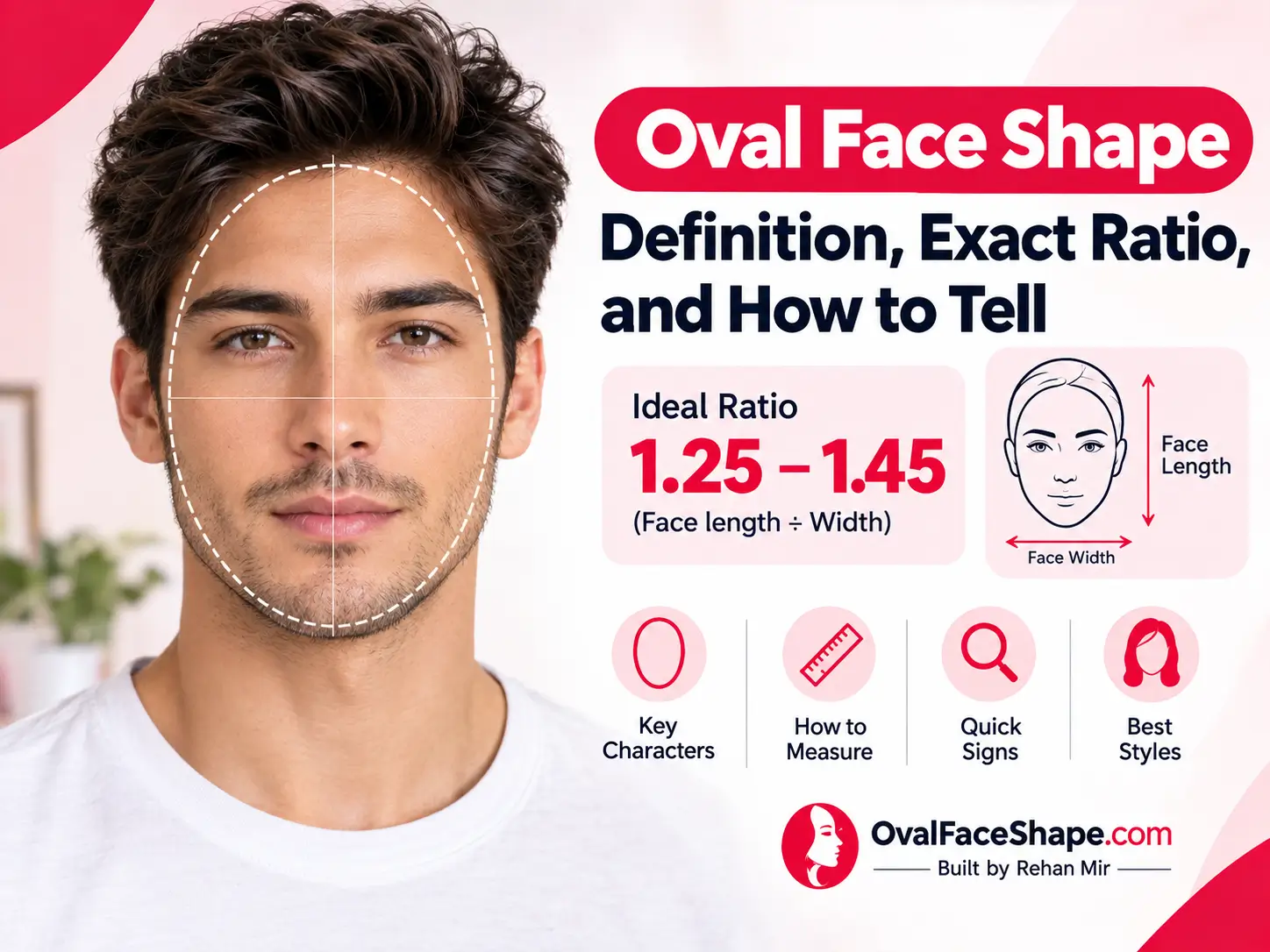
Oval Face Shape: Definition, Exact Ratio, and How to Tell

Oval Face Shape Definition, Exact Ratio, and How to Tell

Quick Answer: An oval face is moderately longer than wide — OvalFaceShape.com’s standard is a 1.3–1.5 ratio of face length to cheekbone width — with cheekbones as the widest point, a forehead slightly wider than the jaw, and a gently rounded chin. If your face reads closer to 1.5× longer than wide with straight sides, … Read more

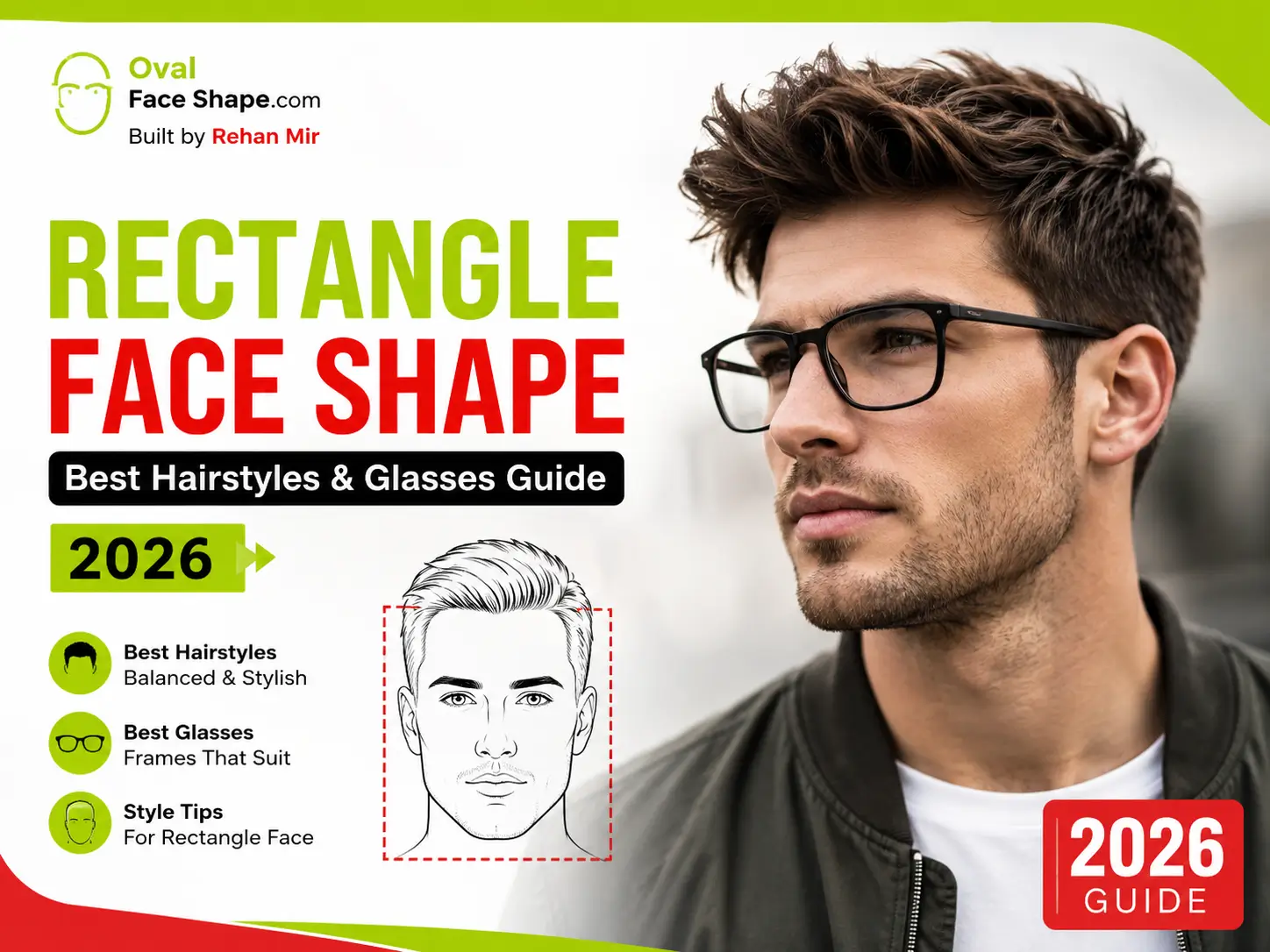
Rectangle Face Shape: Best Hairstyles & Glasses Guide (2026)

Rectangle Face Shape Best Hairstyles & Glasses Guide (2026)

Quick Answer: A rectangle face shape is clearly longer than it is wide, with a straight, squared jawline and a forehead, cheekbones, and jaw that are nearly equal in width. Who this guide is for: If you’re trying to confirm your face shape before choosing a haircut or a new pair of glasses, this guide … Read more

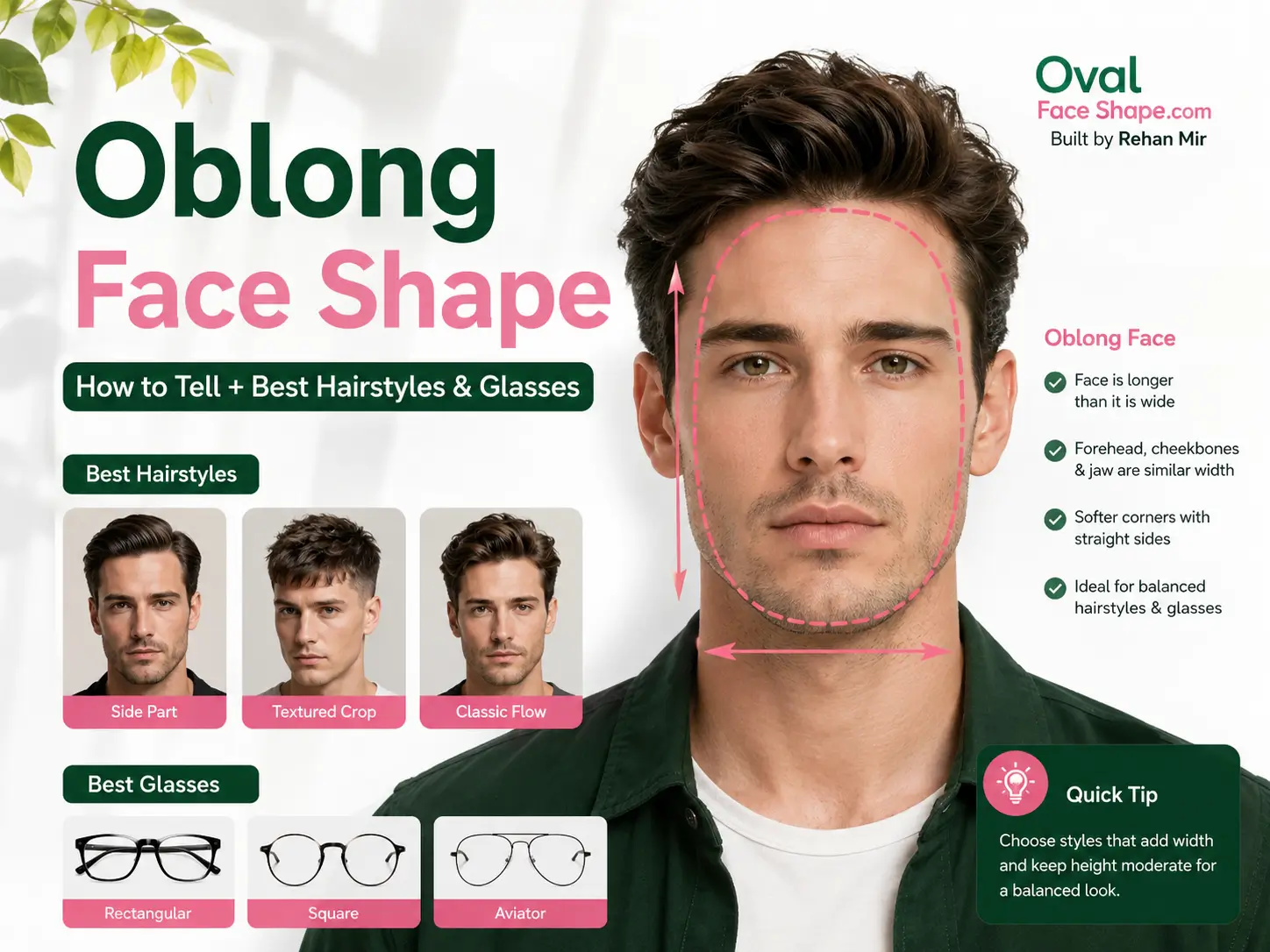
Oblong Face Shape: How to Tell + Best Hairstyles & Glasses

Oblong Face Shape How to Tell + Best Hairstyles & Glasses

Quick Answer: An oblong face shape is noticeably longer than wide, typically with a length-to-width ratio above 1.5, similar-width forehead, cheekbones, and jawline, and straight, non-tapering sides. Oblong Face Shape: How to Identify It and What Actually Flatters It If people keep describing your face as “long,” it’s probably oblong — not oval, and not … Read more

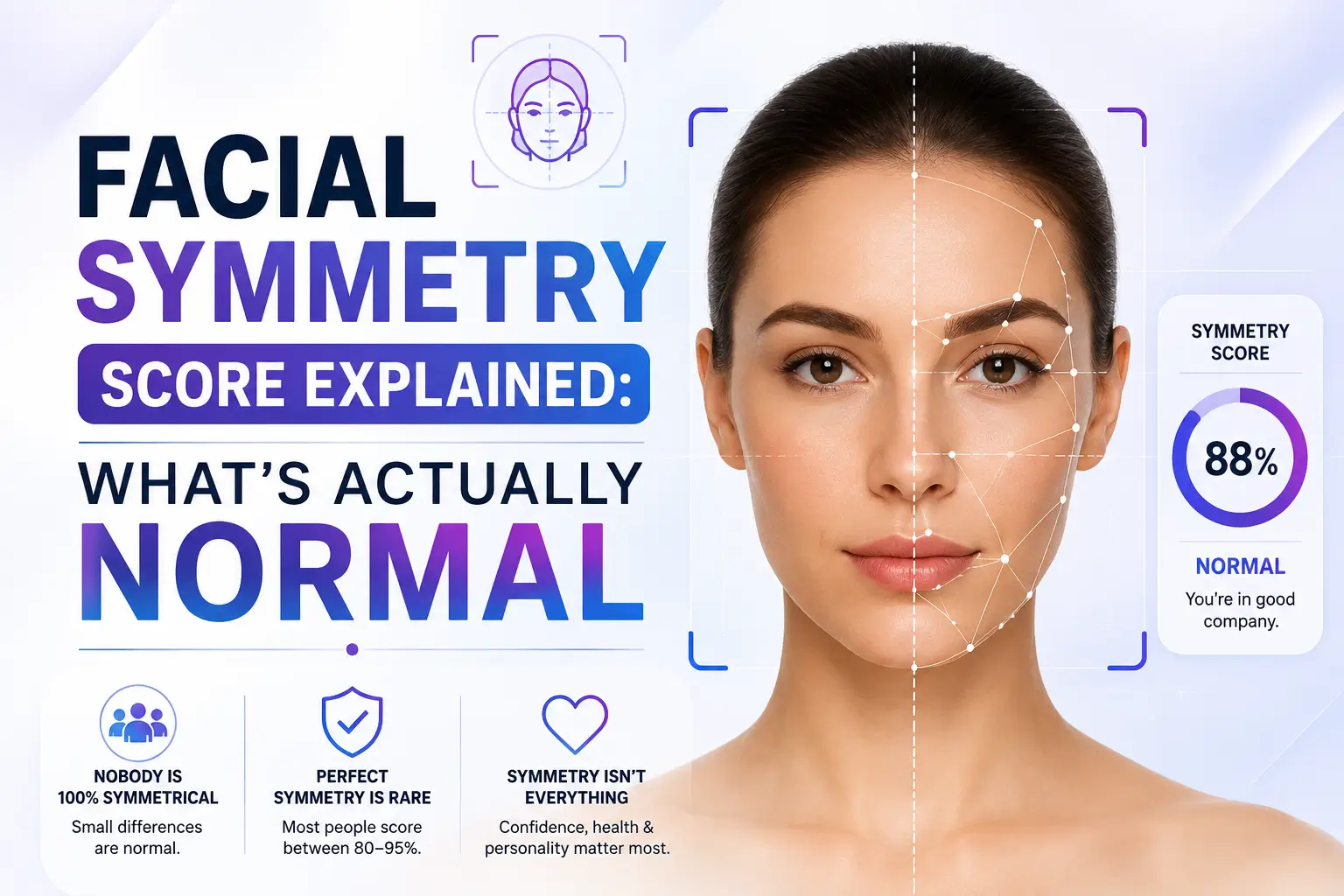
Facial Symmetry Score Explained: What’s Actually Normal

Facial Symmetry Score Explained

Quick Answer: Facial symmetry is how closely the left and right sides of your face match. Perfect symmetry is extremely rare, and most people have small natural differences that are completely normal. AI symmetry scores are estimates, not medical diagnoses, and an 85–95% score is typically considered highly symmetrical. Key Takeaways Nearly everyone has some … Read more

Oval Face Shape — Footer