
Choosing a hairstyle or a pair of glasses might seem like a simple decision, but finding something that genuinely suits your appearance can take time. A hairstyle that looks great on one person may not have the same effect on someone with a different facial structure. The same is true for glasses, beard styles, and even certain makeup techniques.
One reason behind these differences is face shape and facial proportions. Every face has its own combination of features, including forehead width, cheekbone structure, jawline definition, and overall face length.
Understanding these details can make personal styling decisions easier. Today, artificial intelligence is also making this process more accessible through facial analysis tools that help people explore their facial features without relying entirely on guesswork.
What Is AI Face Analysis?
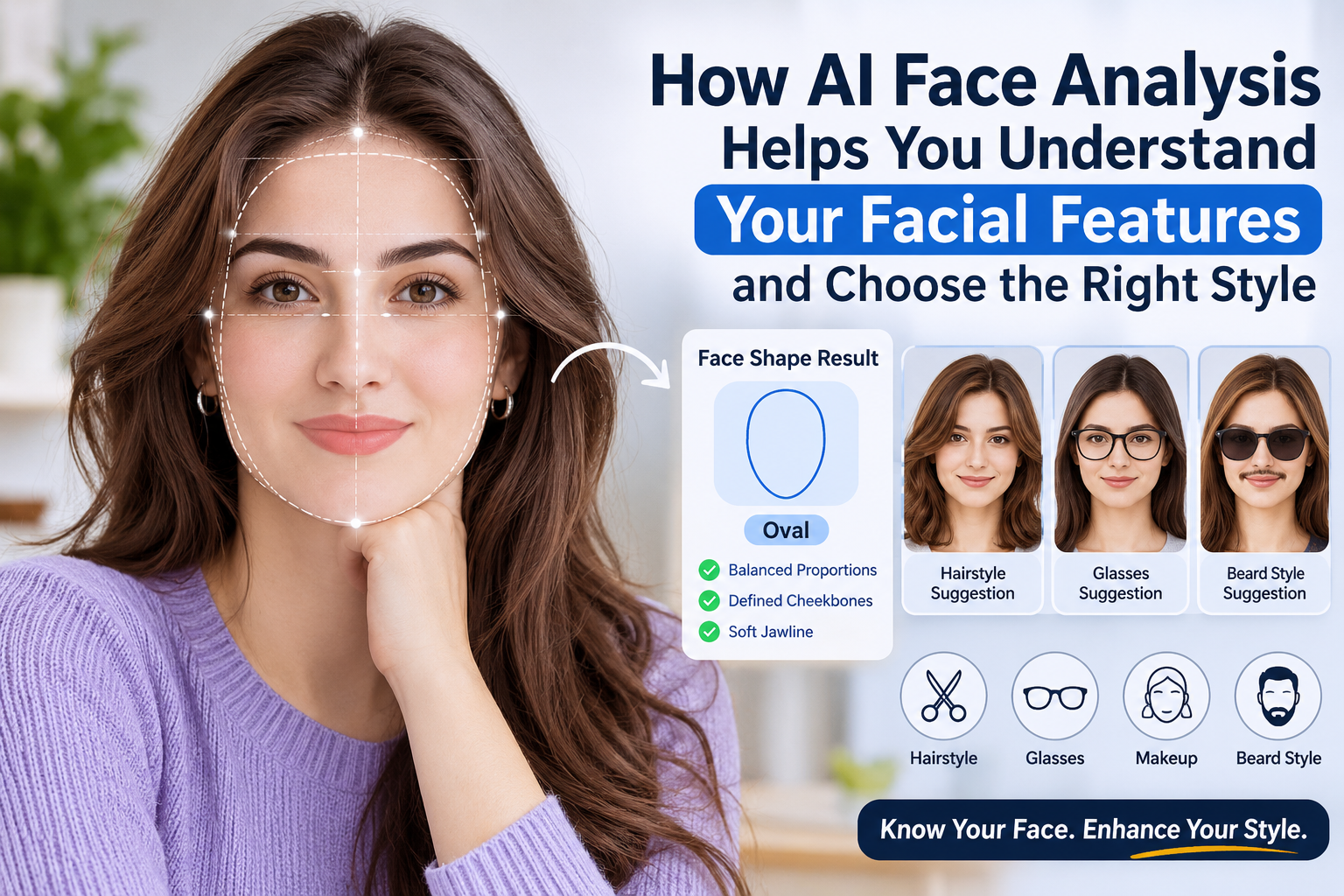
AI face analysis uses computer vision technology to examine visible facial characteristics in a photograph. Depending on the tool, it may identify facial landmarks, estimate proportions, and recognize patterns that help describe different aspects of facial structure.
For example, facial landmarks may include the corners of the eyes, the tip of the nose, the edges of the mouth, and points along the jawline. These reference points help software understand how different facial features relate to one another.
Rather than simply looking at a face as a whole, AI-based systems can examine individual areas and their relative positions.
This can be particularly useful for people who want to learn more about their face shape or understand which styling choices might complement their natural features.
How AI Identifies Different Facial Features
Facial analysis generally begins when a user uploads a clear photograph. The software processes the image and attempts to identify important points across the face.
Some of the main features that may be examined include:
Forehead width: The width of the forehead can help distinguish between certain face shapes. A broader forehead, for example, may be one characteristic of a heart-shaped face.
Cheekbone structure: Cheekbones often play an important role in defining the overall appearance of the face. Their width and position can help distinguish between oval, diamond, and other face shapes.
Jawline shape: A strong, angular jawline may be associated with a square face, while a softer and more rounded jawline is common in round or oval faces.
Face length: The distance between the hairline and chin can provide useful information about overall facial proportions.
These characteristics are not considered in isolation. Their relationship with one another provides a better understanding of the overall facial structure.
Understanding Your Face Shape Before Choosing a Hairstyle
Your face shape can influence how different hairstyles look on you. This does not mean there are strict rules about which haircut you can or cannot wear. Instead, understanding your facial structure gives you a starting point when exploring different styles.
For instance, people with round faces sometimes prefer hairstyles that create the appearance of additional length. Layered cuts, side parts, and styles with some volume on top can help create that effect.
Those with square faces may enjoy softer layers or textured hairstyles that balance the appearance of a more angular jawline.
Oval faces are often considered versatile because their proportions can work well with a wide variety of haircuts. However, hair texture, density, forehead height, and personal preference still matter.
If you are unsure about your facial structure, a free AI face shape detector can give you a starting point for exploring which face shape your visible features most closely resemble.
The result should be treated as guidance rather than a permanent label. Different hairstyles can suit the same face shape, and personal style should always come first.
How Facial Proportions Affect Your Choice of Glasses
Glasses are another accessory where facial proportions can make a noticeable difference.
The goal is not necessarily to find frames that match your face shape perfectly. It is to understand how frame width, shape, and size interact with your natural features.
For example, rounded frames may create an interesting contrast with angular facial features. On the other hand, rectangular frames can add definition to a softer-looking face.
People with oval faces often have flexibility when choosing frame styles, although the overall size of the glasses should still complement their facial dimensions.
A few things worth considering when choosing glasses include:
- Frame width: Frames should generally align comfortably with the width of your face.
- Bridge fit: The bridge should sit comfortably on your nose without constantly slipping.
- Frame shape: Rounded, square, oval, and rectangular frames can create different visual effects.
- Overall proportions: Very large or very small frames may look unbalanced depending on your facial dimensions.
Comfort is just as important as appearance. Even attractive frames may not be the right choice if they do not fit properly.
Can AI Face Analysis Provide Accurate Results?
AI face analysis has become increasingly accessible, but its results are not always perfect.
The quality of the photograph can make a significant difference. Poor lighting, unusual camera angles, facial expressions, and low image resolution can affect how accurately software detects facial landmarks.
Another challenge is that many people do not fit neatly into one face shape category. Someone may have characteristics of both an oval and a square face, for example.
This is why AI-generated results should be viewed as helpful estimates rather than professional measurements or definitive judgments.
For people interested in exploring more facial details, an AI face analyzer can offer another way to examine visible facial characteristics and learn more about their overall appearance.
The most useful approach is to combine these results with your own observations rather than relying on a single automated assessment.
Common Factors That Can Affect Facial Analysis
Even advanced technology depends on the quality of the information it receives. A few simple mistakes can make facial analysis less reliable.
1. Poor lighting
Dark environments and strong shadows can hide important facial details. Natural, evenly distributed lighting usually produces better results.
2. Incorrect camera angle
A photograph taken from above or below can change the apparent proportions of the forehead, nose, and jawline. A straight-on photograph is generally more suitable.
3. Hair covering the face
Hair falling across the forehead or cheeks can make it harder to identify certain facial boundaries.
4. Facial expressions
Smiling, squinting, or raising the eyebrows may temporarily change the visible shape of certain facial features.
5. Low image quality
Blurry or heavily compressed photographs may prevent the software from detecting facial landmarks properly.
For a more consistent result, use a clear, front-facing photograph with a neutral expression and even lighting.
Using Facial Analysis Results to Improve Your Personal Style
Understanding your facial features can be useful when making everyday styling decisions. However, the purpose of facial analysis should not be to limit your choices.
Instead, use the information as a reference when experimenting with different looks.
You might discover that a particular hairstyle adds balance to your facial proportions, or that a different glasses frame creates a more interesting contrast.
You can also use facial analysis as a starting point when discussing haircut ideas with a hairstylist. Rather than simply asking for a popular haircut, you can explain what you like about your facial structure and the appearance you want to achieve.
Remember that other factors matter too. Hair texture, lifestyle, maintenance preferences, and personal comfort all influence whether a particular style will work for you.
Final Thoughts
AI face analysis offers an interesting way to learn more about your facial features and proportions. By examining characteristics such as forehead width, cheekbone position, jawline structure, and face length, these tools can help people better understand their appearance.
This information can be useful when exploring hairstyles, choosing glasses, or simply learning more about what makes your facial structure unique.
Still, there is no universal formula for personal style. AI can provide helpful suggestions, but your preferences and confidence should remain the most important parts of the decision.
The best style is ultimately the one that makes you feel comfortable and confident in your own appearance.